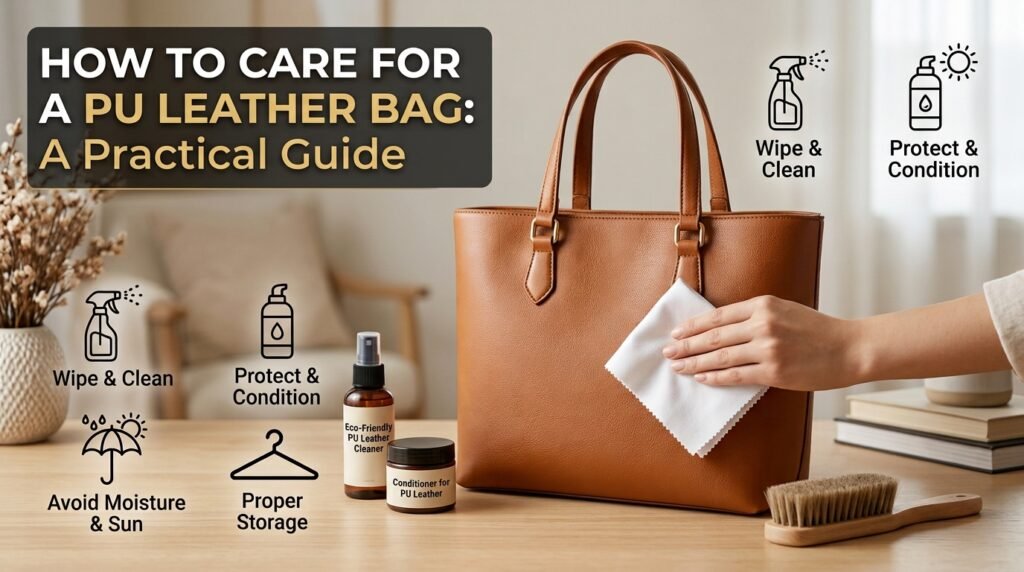
To care for a PU leather bag, wipe it with a soft dry cloth after use, clean marks with a lightly damp cloth (a few drops of mild soap if needed), dry it with a clean cloth and let it air-dry away from heat and sunlight. Store it empty, lightly stuffed to hold its shape, in a cool, dry place. Avoid soaking, alcohol, solvents and leather oils.
Knowing how to care for a PU leather bag keeps it looking good for longer. PU leather is popular for everyday bags because it is lightweight and easy to wipe clean. It still needs the right care: the wrong cleaner or too much heat can dull, crack or peel the surface, and unlike genuine leather, a damaged PU coating generally cannot be conditioned back to health.
What PU leather is, and why it needs different care
PU leather, short for polyurethane leather, is a synthetic, animal-free material made by coating a fabric backing with polyurethane. You may also see it called faux or vegan leather. Because the surface is a coating rather than natural hide, it does not absorb leather conditioners and oils the way genuine leather does, and it reacts differently to heat, solvents and friction.
Finishes and construction vary between bags, so always follow the care label or product page for your specific bag first. For example, Bagoya’s Crescent Hobo Crossbody Bag page advises wiping the PU surface gently with a soft, slightly damp cloth, letting it dry naturally, and avoiding direct heat, strong sunlight, sharp objects and harsh chemicals. The steps below build on that cautious approach.
Build a 30-second after-use routine
- Wipe away dust with a soft, dry cloth, such as microfibre.
- Empty the bag, including receipts, wrappers and loose makeup that can mark the lining.
- Check for spills, damp patches and marks while they are still fresh.
- Close zips and clasps, then store the bag away from heat and direct sunlight.
Small habits prevent most problems. Keep pens capped, cosmetics closed, and liquids in a sealed pouch.
Clean it step by step
- Empty and dust. Open every compartment and shake out crumbs. Use a lint roller or soft brush on the lining, then wipe the exterior with a dry cloth.
- Mix a gentle solution. Add a few drops of mild, fragrance-free liquid soap to a bowl of lukewarm water. Wring a soft cloth until it is only barely damp.
- Test first. Try a hidden area, such as the underside of a flap or the base, and let it dry to check for marks or colour change.
- Wipe gently. Work in small sections with light pressure. Keep moisture away from seams, zips and metal hardware, and never scrub.
- Rinse and dry. Wipe again with a cloth dampened in plain water to remove soap residue, then pat dry with a clean, dry cloth.
- Air-dry fully. Leave the bag open in a shaded, ventilated spot, loosely stuffed with clean tissue or a soft cloth to hold its shape. Do not close it until it is completely dry.
Do not soak the bag, put it in a washing machine or dryer, or speed up drying with a hair dryer or radiator. Heat and excess water can damage the coating, glue and stitching.
Use stain first aid, not stronger products
With PU leather, gentle and early beats strong and late. Blot first; rubbing spreads marks and wears the coating.
| Problem | What to do | Avoid |
|---|---|---|
| Dust and light scuffs | Wipe with a dry microfibre cloth, then a lightly damp one if needed | Hard rubbing, which can dull the finish |
| Rain or splashes | Blot straight away, check inside, and air-dry naturally | Hair dryers and radiators |
| Food and drink | Blot promptly, then use the gentle cleaning method above | Rubbing the spill outwards or letting it dry in |
| Oily marks from hand cream, sunscreen or cooking oil | Blot, wipe with the mild soap cloth, rinse with a plain damp cloth and dry | Strong degreasers and repeated scrubbing |
| Ink and makeup | Act quickly and blot only. If it does not lift with mild soap, stop and ask a professional cleaner | Nail-polish remover, acetone, bleach or alcohol, which can damage coatings |
| Dye transfer from dark denim | Wipe quickly with the mild soap method; prevention is easier than removal | Abrasive sponges |
| Stale odours | Air the bag in a shaded, ventilated place with all pockets open | Sealing it in plastic |
Hand cream, sunscreen, hand sanitiser and perfume can mark or dull some finishes. Carry them in a sealed pouch and let your hands dry before handling the bag.
Store it so it keeps its shape
- Empty it and make sure it is dry before putting it away.
- Stuff soft bags loosely with clean tissue or a soft cloth. Avoid newspaper, which can transfer ink.
- Use a breathable cotton dust bag rather than sealed plastic.
- Store upright and do not stack heavy items on top. Avoid hanging soft bags by thin straps for long periods.
- Keep it cool, dry and shaded. Heat and strong sunlight can fade colour and stress the coating.
- Keep light colours away from new or dark clothing that could transfer dye.
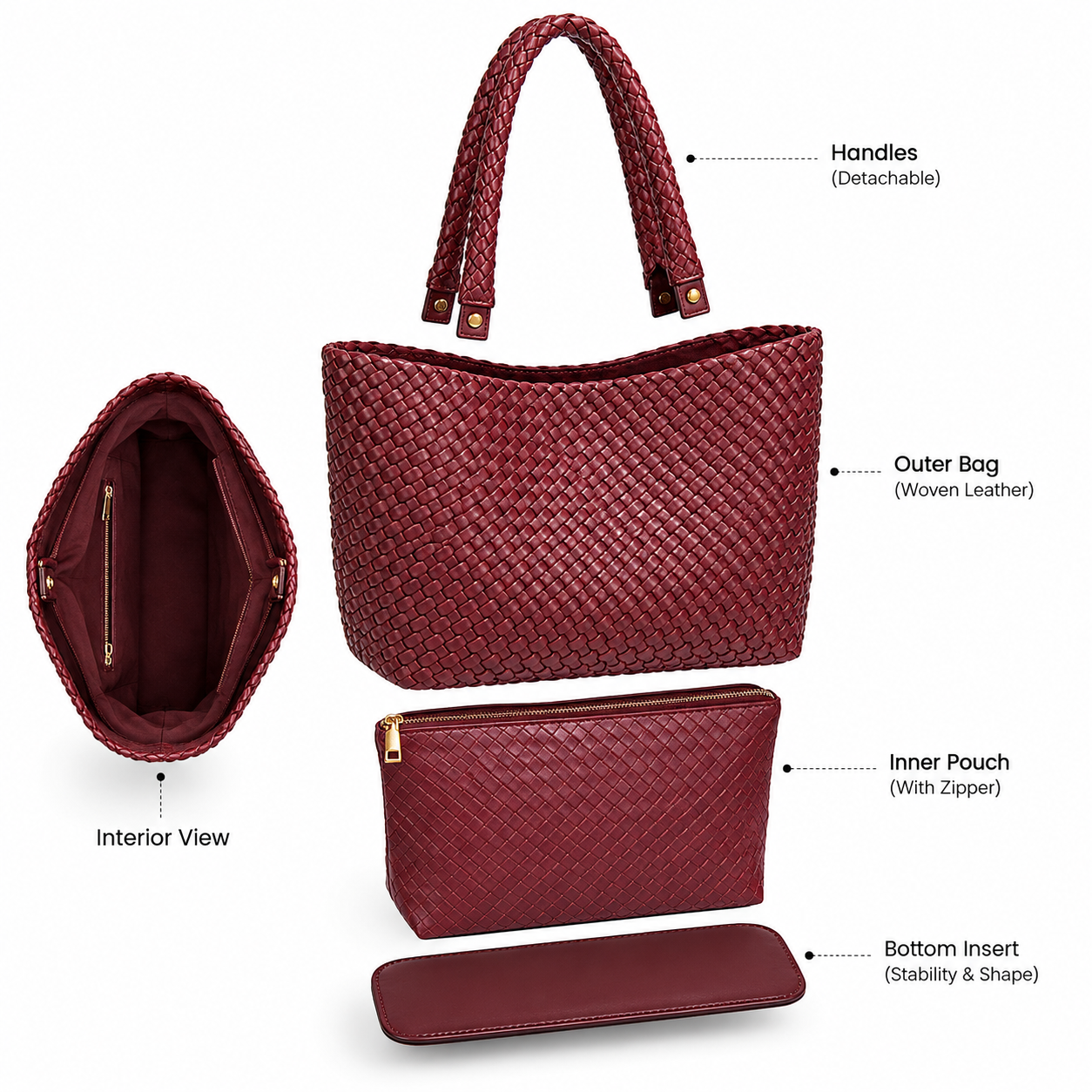
A construction detail view of Bagoya’s woven-look underarm bag. Seams, lining and hardware are where moisture and dirt tend to gather.
Adjust your care to your climate
Bags travel and customers live in very different conditions. Use this table to adapt the basics:
| Climate | Main risk | What to do |
|---|---|---|
| Hot and humid | Trapped moisture and odours | Make sure the bag is fully dry, then store it in a breathable bag in a ventilated space |
| Hot and sunny | Heat and UV can fade colour and stress the coating | Never leave it in a parked car; store it in the shade |
| Cold and dry | The coating may stiffen in the cold, and indoor heating dries materials out | Let the bag reach room temperature gradually and keep it away from heaters |
| Rainy | Water at seams and hardware, plus possible colour bleeding | Avoid heavy rain, blot immediately and air-dry naturally |
Look after hardware, straps, zips and lining
- Straps and handles: carry the bag by its intended straps, and avoid overloading, which strains stitching and attachment points.
- Metal hardware: wipe with a soft, dry cloth. Do not apply metal polish where it could touch the PU surface.
- Zips: open and close them without forcing. If fabric catches, free it gently before moving the zip.
- Lining: lift lint with a roller, and spot-clean gently with the mild soap cloth if needed. Let it dry completely.
Care mistakes to avoid
- Using alcohol wipes, bleach, acetone or abrasive pads.
- Applying leather oils or conditioners made for genuine leather, which can leave a greasy film on PU.
- Soaking the bag or leaving it wet in a closed space.
- Drying with direct heat or in strong sunlight.
- Overfilling the bag so straps, seams and zips take too much strain.
- Treating every finish the same instead of checking the care label first.
When wear cannot be fixed
All PU coatings eventually show their age. Peeling, flaking or cracking means the coating itself is breaking down, and conditioners or polishes cannot re-bond it. Gentle care slows wear, but it does not stop it. A professional repair service may help with edges or hardware, although results vary.
If a Bagoya item arrives damaged, has a manufacturing defect or is not the item you ordered, email support@bagoya.com within 7 days of delivery with your order number and clear photos. See Returns & Refunds for the full policy.
Quick PU leather care checklist
- Check the care label or product page first.
- Wipe dust with a dry cloth after use.
- Blot spills; never rub them in.
- Clean with a barely damp cloth and mild soap, after a hidden-spot test.
- Air-dry away from heat and sunlight.
- Store empty, dry, lightly stuffed and shaded.
Bags you can apply this to
These Bagoya styles are listed with PU exteriors. Always review each product page for the latest details and care notes.
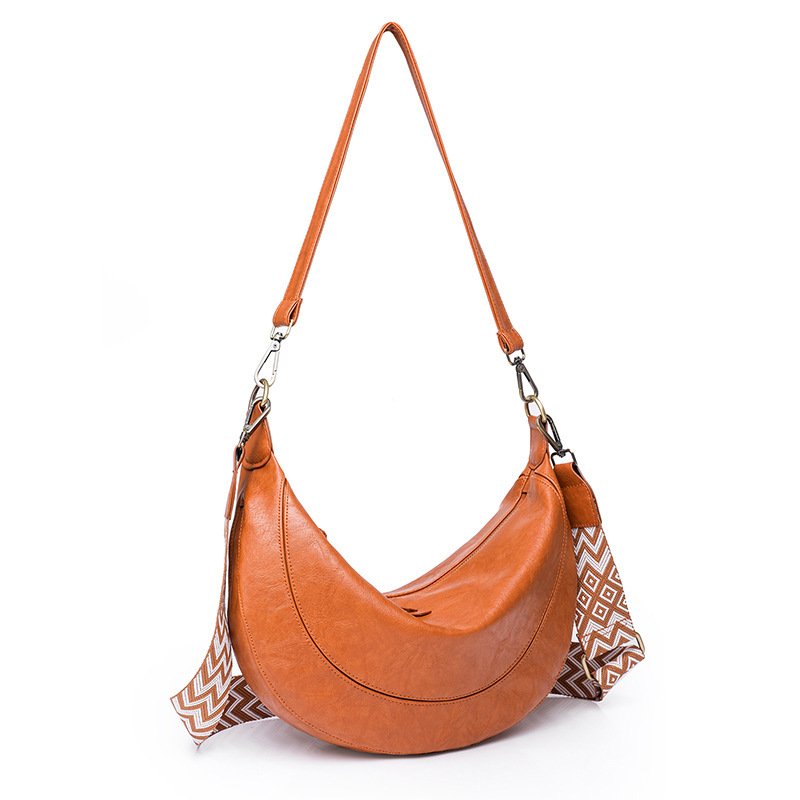
Crescent Hobo Crossbody Bag
- Soft PU outer, polyester-fibre lining
- Product page care tip: wipe gently with a soft, slightly damp cloth and dry naturally

Multi-Pocket PU Leather Crossbody Bag
- Soft PU exterior, polyester-fibre lining
- Product page care tip: wipe gently, avoid harsh cleaners, soaking and excess heat
Frequently asked questions
Can I use soap and water on a PU leather bag?
Yes, if your bag’s care instructions allow it. Use a few drops of mild, fragrance-free soap in lukewarm water, wring the cloth until barely damp, and test a hidden area first. Wipe gently, rinse with a plain damp cloth, then dry. Do not soak the bag.
Can a PU leather bag get wet?
Light splashes are manageable if you blot them promptly and let the bag air-dry naturally. Avoid heavy rain and soaking, which can affect seams, lining and hardware. Never dry it with a hair dryer or radiator, and check the care instructions for your specific bag.
Can I use leather conditioner on PU leather?
Generally no. PU leather has a synthetic coating that does not absorb conditioners the way genuine leather does, so products can sit on the surface and leave a greasy film. Stick to gentle cleaning and sensible storage, and follow your bag’s care label.
What should I never use on PU leather?
Avoid alcohol wipes, hand sanitiser, bleach, acetone, nail-polish remover, strong degreasers and abrasive pads. These can strip or damage the coating. If a mark does not lift with mild soap, stop and ask a professional cleaner instead of trying stronger products.
How often should I clean a PU leather bag?
As a guideline, wipe it with a dry cloth after heavy use and give it a damp-cloth clean about once a month if you use it often. Check the lining and storage whenever the seasons change, and deal with spills as soon as they happen.
Why is my PU leather bag peeling, and can it be fixed?
Peeling means the polyurethane coating is breaking down, usually through friction, heat, humidity and age. It cannot be fully restored at home, and conditioners will not re-bond it. Gentle care slows further wear, and a professional repair service may help with edges or hardware.
Need a new everyday bag?
Browse our collection, check each listing’s materials and care notes, and enjoy free shipping worldwide on every order.
Shop handbags & shoulder bags Shop crossbody & tote bagsKeep reading
About this guide. Written by the Bagoya Editorial Team and last updated on 23 October 2026. This is general care guidance reflecting common practice, not laboratory testing, and it is not a substitute for the care instructions supplied with your specific bag. Product notes come from our live product pages. Questions? Email support@bagoya.com.
Pingback: Leather vs Canvas Tote Bags: Which Is Best?
Pingback: Genuine Leather vs PU Leather Bags: Which Should You Buy?