Choose genuine leather if you want a bag to keep for years, you don’t mind a little regular care, and you can spend more upfront. Choose PU leather if you want something lighter on the budget, low-maintenance and animal-free, and you accept that the coating may wear sooner. Either way, check the exact material on the listing: “genuine leather” is a broad label, not a quality grade.
Sooner or later, every bag shopper hits the same question: is a genuine leather bag worth the extra money, or is PU leather good enough? The honest answer depends on how you’ll use the bag. This guide compares genuine leather vs PU leather bags on durability, looks, care, climate, cost and environmental impact, so you can decide from facts rather than from a product photo.
What genuine leather and PU leather really are
Genuine leather is made from animal hide, most often cowhide, that has been tanned so it doesn’t decay. PU leather (polyurethane leather) is a synthetic, animal-free material: a fabric backing coated with polyurethane and finished to look like leather. You’ll also see it sold as faux leather or vegan leather.
The trouble is that the labels around them are slippery. “Genuine leather” sounds like a top grade, but it isn’t. Here is how the common terms are usually used:
| Label | What it usually means | Worth knowing |
|---|---|---|
| Full-grain leather | The outermost layer of the hide, with its natural grain left intact | Typically the most durable, and the type that develops a patina |
| Top-grain leather | The upper layer of the hide, sanded or buffed to even out the surface and then finished | Smoother and more uniform than full-grain, but still real leather |
| First-layer (top-layer) cowhide | Listing wording that generally refers to leather from the upper part of the hide | Ask the seller to confirm the exact grade if it matters to you |
| “Genuine leather” | A broad term for real leather that can include lower layers of the hide | It describes a category, not a promise of top quality |
| Bonded leather | Leather scraps and fibres joined with adhesive and coated | Not solid leather, and usually wears faster |
| PU, faux or vegan leather | A polyurethane coating on a fabric backing | Contains no animal material; durability depends on the coating |
Genuine leather vs PU leather bags at a glance
| Feature | Genuine leather | PU leather |
|---|---|---|
| Made from | Treated animal hide | Polyurethane coating on a fabric backing |
| Look | Natural, slightly irregular grain | Uniform, consistent finish in many colours and textures |
| Ageing | Tends to soften, mark and darken with use | Stays consistent until the coating wears, cracks or peels |
| Care effort | More attention: keep dry, clean gently, condition occasionally | Simple wipe-clean care; avoid solvents and heat |
| Typical lifespan | Often many years with care | Usually shorter, depending on use and conditions |
| Upfront cost | Usually higher | Usually lower |
| Animal-free | No | Yes |
| Often a good fit for | A long-term daily bag, and people who like leather’s ageing | Trend pieces, tighter budgets, animal-free shoppers, low-maintenance routines |
Durability and ageing
Real leather is a fibrous natural material, so with sensible care it tends to wear in rather than wear out. Scratches soften, the surface develops character, and a good bag can last many years. PU is different. Its surface is a thin coating, and when that coating eventually wears, cracks or peels, the damage can’t be reversed with conditioner. Friction, heat and prolonged humidity speed that process up.
Still, material is only part of the story. Stitching, handles, zips, hardware and edge finishing decide whether a bag survives daily life. A badly made leather bag can fail before a well-made PU one, so look at construction as well as the material name.
Look and feel
Genuine leather has a natural grain that varies from bag to bag. Small differences in texture and tone are normal, and Bagoya’s leather product pages note this for exactly that reason. PU leather is manufactured, so the finish is consistent, and brands can produce almost any colour or embossed texture. If you like a perfectly even, uniform look, PU delivers it. If you like a bag that looks a little different from every other one, leather does.
Care and maintenance
Genuine leather likes to stay dry and away from heat. Keep it away from excess moisture, direct heat and harsh cleaners, dust it with a soft, dry cloth, and test any leather-care product on a hidden spot first. Occasional conditioning with a product made for leather helps it stay supple.
PU leather asks for less effort but a different approach: wipe it with a lightly damp cloth, avoid solvents, alcohol and heat, and skip leather conditioners, which can leave a greasy film on a synthetic surface. Our step-by-step PU leather bag care guide covers cleaning, stains and storage.
Climate and weather
Bags travel, and so do customers. Neither material is immune to the weather, but they react in different ways:
| Climate | Genuine leather | PU leather |
|---|---|---|
| Hot and humid | Keep it dry and let air circulate to avoid musty smells and mould | Heat and moisture can speed up coating wear; store in a breathable bag |
| Rainy | Water can stain or stiffen leather; blot and dry slowly, away from heat | Wipe dry quickly and check seams and lining; avoid soaking |
| Cold and dry | Leather can dry out near heaters, so keep it away from direct heat | The coating may stiffen in the cold, so let it warm up gradually |
| Hot and sunny | Strong sun can fade and dry the surface | Heat and UV can fade colour and stress the coating |
Cost and value
Leather usually costs more upfront because of the raw material and processing. But price per use is a fairer yardstick than price tag. If a bag costs twice as much and you carry it three times as long, the pricier bag is the cheaper one over time. On the other hand, if you love trends, change your style often or simply want a colour for one season, a PU bag lets you experiment without a big commitment.
Environment and ethics
This is where simple claims can be misleading. PU leather contains no animal hide, which may matter to shoppers avoiding animal-derived materials, but it is a polymer-coated synthetic material and is not automatically the lower-impact option. Genuine leather is made from animal hides; its environmental footprint depends in part on how the hide is sourced, how it is tanned and finished, and how wastewater and process chemicals are managed. The European Commission’s reference document on tanning identifies emissions to water, air and soil, as well as process chemicals, as environmental considerations in tannery operations. Research reviews also describe water and chemical use in leather processing, while noting that impacts vary by process and production conditions. Neither material is impact-free, and this article is not a product life-cycle assessment. A bag’s overall impact also depends on its construction, transport, how long it is used, whether it can be repaired, and what happens at end of life. Choosing PU may avoid animal hide, but that alone does not prove a smaller environmental footprint; choosing leather may offer repair and ageing advantages in some cases, but those benefits depend on quality and actual use. Compare the material honestly and choose the bag that fits your needs and values.
How to tell which one you’re holding
No single test is foolproof, and the label and the seller’s honesty matter most. These checks help, especially when your bag arrives:
- Read the listing. Look for specific wording such as “top-grain cowhide”, plus the lining material. Vague terms deserve a question to the seller.
- Look at cut edges and the inside. Real leather shows a fibrous texture, while PU often shows a fabric backing under a thin coating.
- Study the grain. Leather’s pores and texture are irregular. A perfectly repeating pattern suggests an embossed surface.
- Flex it gently. Leather tends to wrinkle in fine, uneven lines, while PU often looks smoother or creases more uniformly. This is a hint, not proof.
- Use your nose with caution. Leather has a natural scent and PU can smell of plastic, but finishing treatments can blur the difference.
Common myths about leather and PU
- “Genuine leather means the best leather.” It doesn’t. It’s a broad category, and full-grain or top-grain describe higher-quality layers.
- “PU is always cheap and bad.” Quality varies. A well-made PU bag used gently can look good for a long time, and it suits many people better than leather.
- “Leather doesn’t need care.” It lasts longer when you keep it dry, clean it gently and avoid heat.
- “Vegan means eco-friendly.” Animal-free is not the same as low-impact, because PU is plastic-based.
So which should you buy?
| If you… | Lean towards | Why |
|---|---|---|
| Want one bag for most days over many years | Genuine leather | It tends to wear in well when cared for |
| Prefer simple wipe-clean care | PU leather | Lower maintenance and no conditioning |
| Are on a tighter budget or like trend colours | PU leather | Lower upfront cost and less regret if your style changes |
| Want an animal-free bag | PU leather | It contains no animal material |
| Love a natural, ageing look | Genuine leather | The grain and patina change over time |
| Live somewhere very humid or rainy | Either, with extra care | Neither is immune, so keep it dry and ventilated |
Examples from the Bagoya collection
Bagoya sells both materials, so here are two of each. Facts come from the live product pages; always check the current listing before ordering.
Genuine leather styles
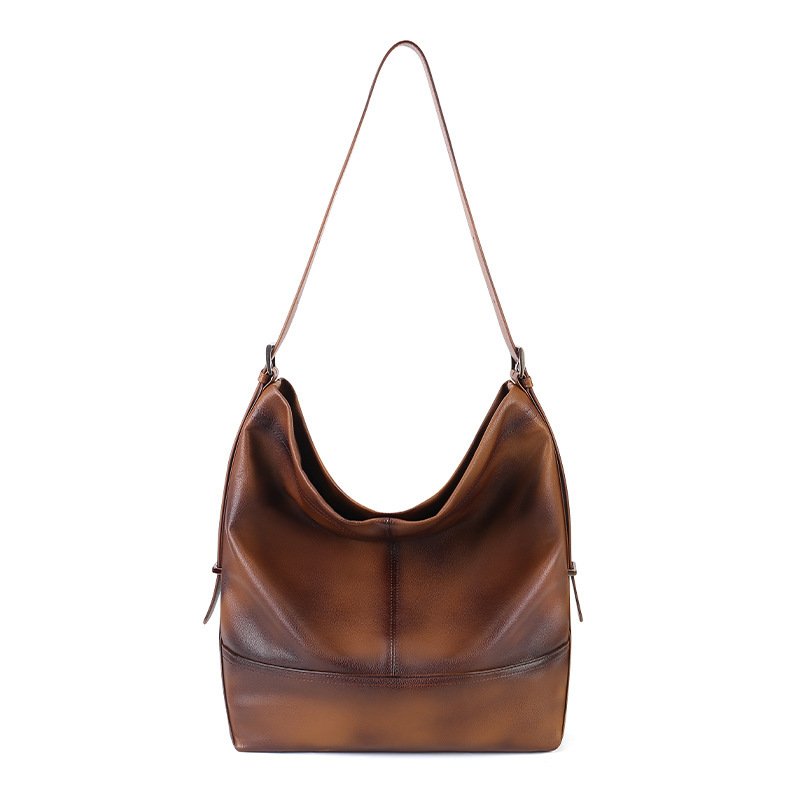
Genuine Leather Shoulder Bag for Women
- Top-grain cowhide, per supplier specifications
- Polyester lining, zip fastening, single shoulder strap
- Hidden inner zip pocket and external cut-out pocket
- Black and brown tones
Check: confirm current colour options in the product selector.
View this bag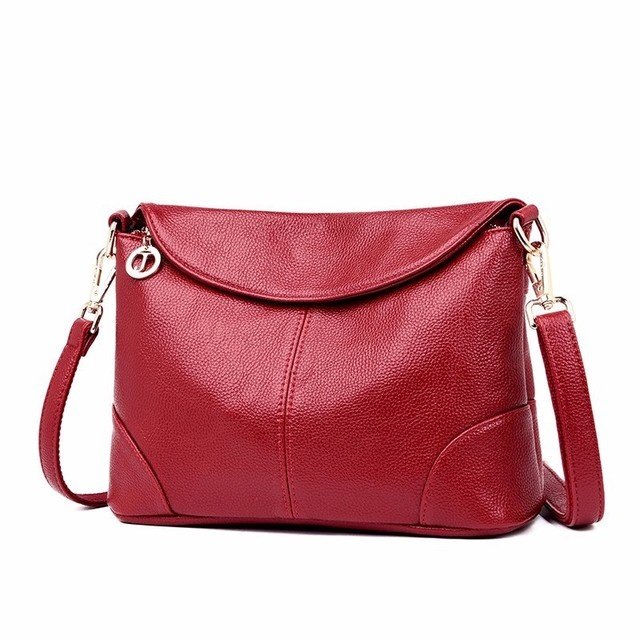
Claire Genuine Leather Crossbody Bag
- First-layer cowhide, per supplier specifications
- Polyester lining
- Compact: about 28 × 10 × 5 cm (11 × 4 × 2 in)
- Black, blue, purple and red options
Check: it is a compact size, so confirm your phone and wallet fit.
View this bagPU leather styles
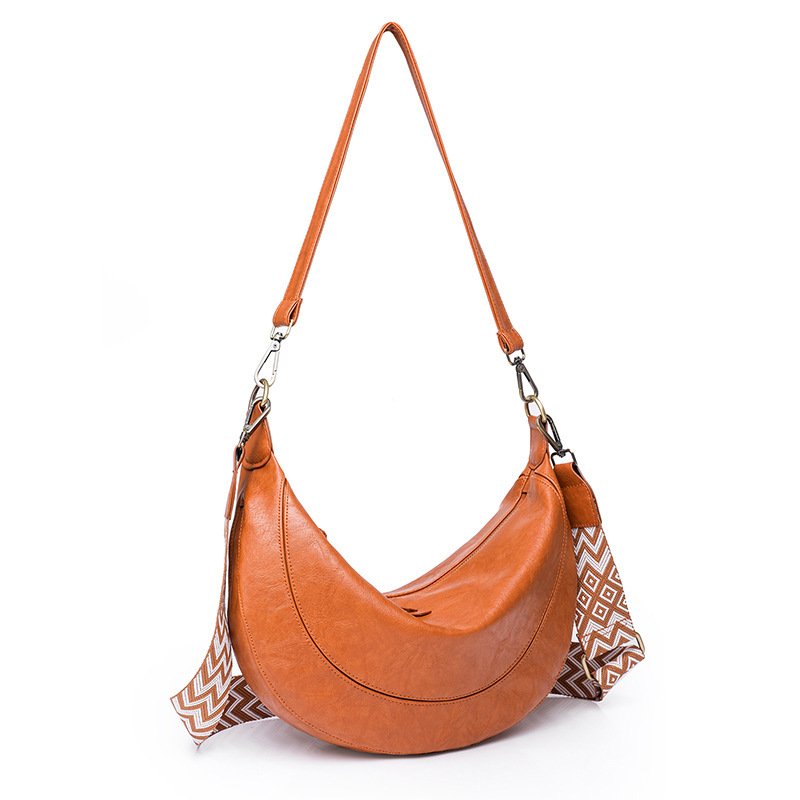
Crescent Hobo Crossbody Bag
- Soft PU outer, polyester-fibre lining
- Half-moon shape with double straps as listed
- Three-dimensional exterior pocket
- Brown and Macaron Pink options
Check: only parcel dimensions are listed, so confirm bag size with support.
View this bag
Multi-Pocket PU Leather Crossbody Bag
- Soft PU exterior, polyester-fibre lining
- Horizontal shape with patchwork stitching
- Hidden zip pocket and ID-card slot
- Black or Brown
Check: a laptop compartment and water resistance are not listed.
View this bagHow Bagoya describes materials
Because material is the whole point of this comparison, here is how we handle it on our own product pages:
- We name the material the supplier lists, and we say so with wording such as “according to supplier specifications”.
- When a detail isn’t confirmed, such as a size, strap or feature, we flag it instead of guessing.
- Our shipping, returns and contact details are published in full, and you can email support@bagoya.com with questions before you buy.
- We sell both genuine leather and PU, so our aim is to help you choose the right one for you, even if that is the lower-priced option.
Ordering internationally
- Shipping: free on every Bagoya order, worldwide. Orders are processed in 1–2 business days, with estimated delivery of 7–15 business days.
- Customs and import taxes: any duties or taxes your country charges are separate from the checkout price. Some countries apply different rates to leather and non-leather bags, so check your local customs guidance for the material you choose.
- Returns: you can request a return within 30 days of delivery for unused items in original condition. Report damaged, defective or wrong items within 7 days of delivery, with photos.
Read the full Shipping & Delivery and Returns & Refunds pages before you order.
Frequently asked questions
Is genuine leather better than PU leather?
It depends on what you value. Genuine leather generally lasts longer with care and develops character, but it costs more and needs more attention. PU leather is cheaper, low-maintenance and animal-free, but its coating can wear or peel sooner. Neither is best for everyone.
Does PU leather last as long as real leather?
Usually not. A well-cared-for genuine leather bag can last many years, while a PU coating tends to wear, crack or peel sooner, especially with friction, heat and humidity. Construction quality and how you use the bag matter as much as the material.
Is “genuine leather” the highest quality leather?
No. Genuine leather is a broad label for real leather and can include lower layers of the hide. Full-grain and top-grain describe higher-quality upper layers. Check the listing for the specific grade, and ask the seller if it isn’t stated.
How can I tell genuine leather from PU leather?
Read the listing first. Then check the cut edges and inside, which show fibres for leather and often a fabric backing for PU. Look at the grain, which is irregular on leather and repeating on embossed PU. No single test is conclusive, so rely on clear labelling.
Is PU leather waterproof?
Not reliably. A PU surface wipes clean easily, but water can still reach seams, lining and stitching, and prolonged moisture or heat can damage it. Blot water quickly and let the bag air-dry. Treat a bag as waterproof only if the listing says so.
Which is better in a hot, humid climate?
Neither is immune. Humidity and heat can speed up wear on PU coatings, and leather can develop mould or odours if stored damp. In either case, keep the bag dry, let air circulate around it and avoid storing it in sealed plastic.
Is PU leather vegan and eco-friendly?
PU leather contains no animal material, so it is generally considered vegan. But it is a plastic-based material, and leather production also has environmental costs, such as tanning. Neither is impact-free, and a bag you use for years generally has a smaller footprint than one you replace often.
Find the right material for your routine
Compare genuine leather and PU styles, read each listing’s material details and enjoy free shipping worldwide on every order.
Shop handbags & shoulder bags Shop crossbody & tote bagsKeep reading
About this guide. Written by the Bagoya Editorial Team and last updated on 23 October 2026. Bagoya sells both genuine leather and PU leather bags, so we have an interest in both. This guide reflects common industry practice and the specifications on our live product pages; it is not laboratory testing. Questions? Email support@bagoya.com.
Further reading on material impacts: European Commission Joint Research Centre: Best Available Techniques Reference Document for the Tanning of Hides and Skins and a peer-reviewed review of water, chemicals and effluents in leather post-tanning.